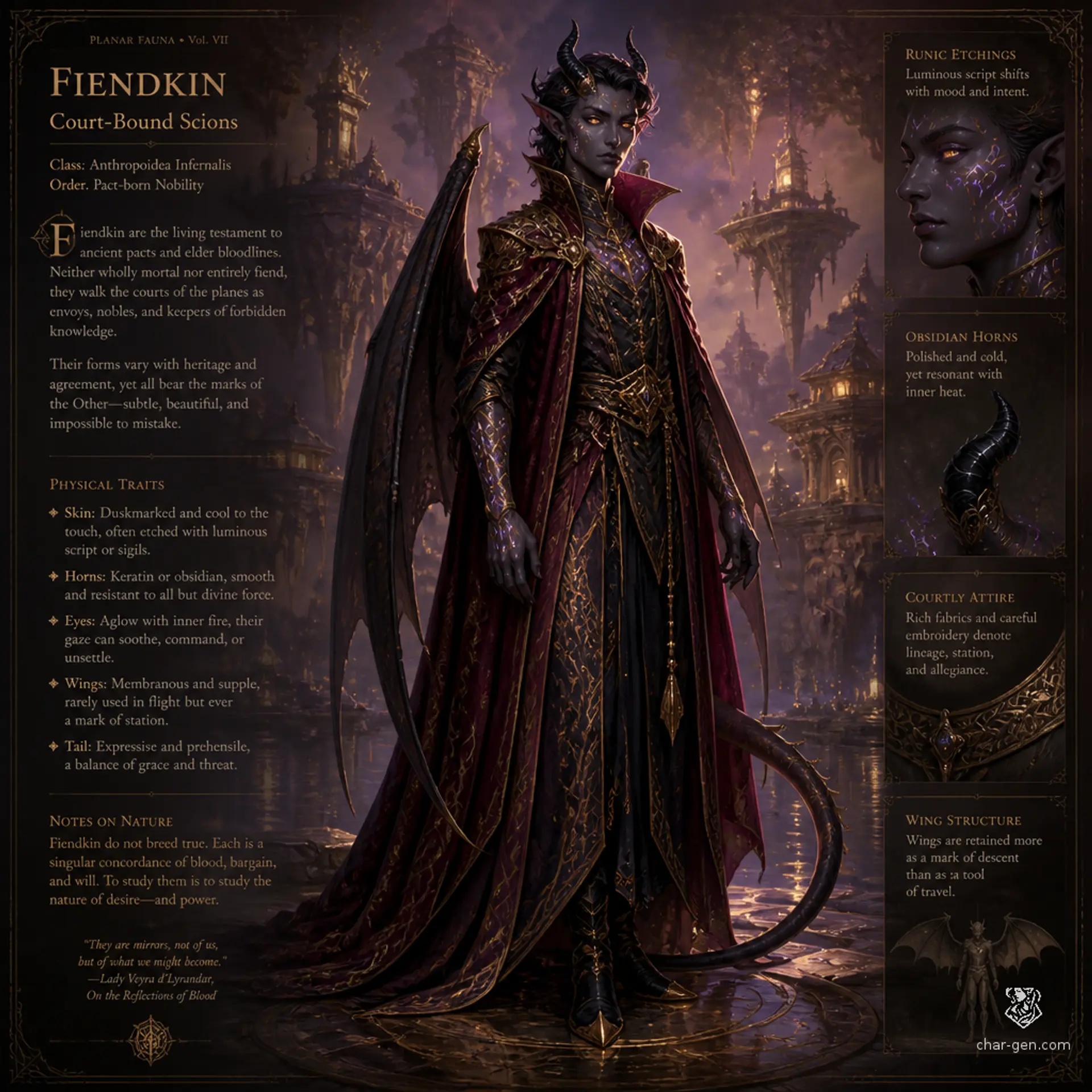
Fiendkin society is organized around courts rather than nations, and courts around reputation, service, and lineage. Family is central. Children are typically raised in multigenerational households where grandparents, aunts, uncles, lovers, and chosen kin all share responsibility. Oral history is prized, as are memory vaults, dream journals, coded love letters, and legal agreements that must be witnessed by at least one elder. Courtesy is treated as a serious art, not a social ornament. Public conflict is usually negotiated through layered ritual, debate, performance, or symbolic challenges before violence is permitted. Succubi are often associated with diplomacy, art, medicine, and emotional discernment. Incubi commonly hold offices in law, administration, architecture, strategy, and defense. Concubi serve as archivists, interpreters of dreams, memory custodians, and healers of identity. Though outsiders often misread their customs as decadence, Fiendkin culture is, at its core, disciplined, intimate, and built around the conviction that no person should be owned by desire, duty, or prophecy.