Often 500 years or more, with the oldest among them living far beyond that if illness, war, and sorrow do not claim them first.
Darkvision
60 ft.
Habitat
Ancient forests, moonlit river valleys, high-canopy cities, and secluded ruins where memory is treated as a sacred craft.
elf-inspired
elf-kin
mystic
forest
arcane
long-lived
field-guide
playable ancestry
D&D 5E 2024
homebrew
no em dash
ahhhh
moonlit
noble
wanderer
keeper of memory
subspecies
original fantasy species
humanoid
medium
uncommon
silver-eyed
ancient
graceful
scholar
warden
bardic
ranger-like
diplomatic
reclusive
lorekeeper
forest cities
ruins
ritual
ancestral
quiet power
storybook fantasy
high fantasy
prose traits
mechanical prose
character option
tabletop RPG
lineage
heritage-like concept
exploration
roleplay hooks
SizeMedium
Speed30 ft.
LifespanOften 500 years or more, with the oldest among them living far beyond that if illness, war, and sorrow do not claim them first.
Creature TypeHumanoid, elf-kin
Darkvision60 ft.
Moonbough Folk are the keepers of old paths and older promises, elf-kin who treat memory as both shield and inheritance. They move through the world like archivists with blades, singers with maps, and diplomats who can outwait almost any lie. A Moonbough character can be the last witness to a lost kingdom, the child of a forbidden grove, or the restless heir to a thousand-year grievance, and every one of those lives can become an adventure.
Physical Description
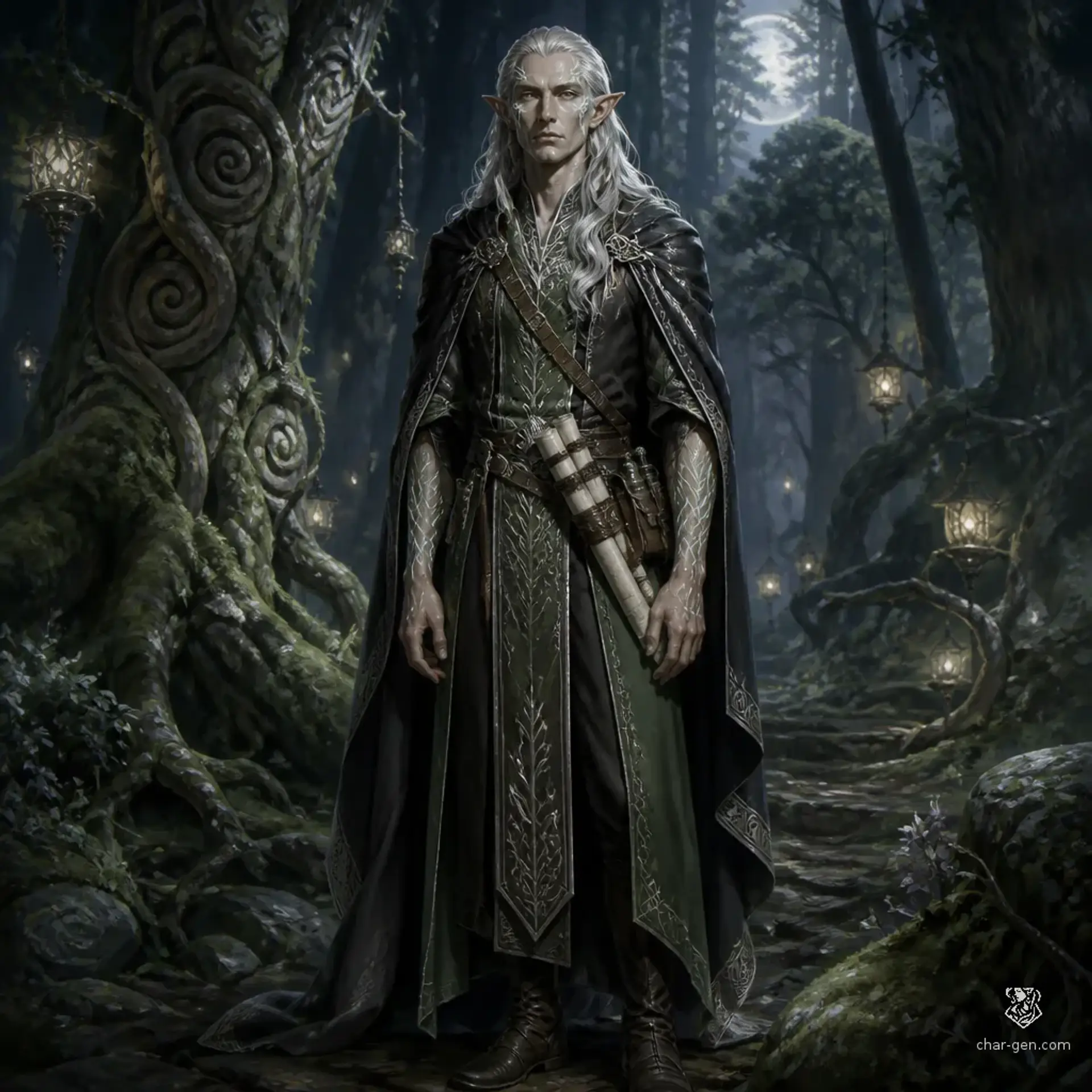
Moonbough Folk are lean, long-lived elf-kin with fine-boned features, broad expressive eyes, and hair that often shines in pale gold, smoke-black, moon-silver, or deep green. Their ears taper elegantly, though the shape varies widely between bloodlines. Many have faint natural markings along the temples, collarbones, or forearms that resemble leaf veins, river forks, or star trails. Their movements are quiet and economical, giving the impression that they are listening to a world just beyond ordinary hearing.
Society & Culture
Moonbough society is built around continuity. Children learn the names of trees, governors, and dead relatives with equal seriousness. They keep memory gardens, oath chambers, and song vaults, and many communities maintain a formal role for keepers, who preserve oral histories, maps, and family disputes. Art is rarely made for novelty alone. It is made to mark a season, settle a debt, honor a harvest, or remind the living who came before. Private ambition exists, but it is expected to answer to the needs of the grove, enclave, or lineage.
Religion & Alignment
They do not believe goodness is inherited, but many honor the idea that every act leaves a trace. Their devotions lean toward moon, forest, river, and ancestor spirits, though some serve gods of scholarship, travel, or mercy. As a people, they are not bound to any alignment, but they often prize restraint, elegance, and personal responsibility, which can make them seem more orderly than they truly are.
Homelands & Architecture
Moonbough settlements are usually built to honor living growth rather than conquer it. Homes are woven around trunks, across ravines, or within the ribs of abandoned stoneworks, with stairways that spiral like vines and windows placed to catch dawn, dusk, and moonrise. Their roads are narrow, deliberate, and often marked by carved memories, ancestor knots, or lanterns that are relit only on ceremonial nights.
Relationships With Other Peoples
Moonbough Folk are often seen as gracious but difficult to know. They value precision, manners, and long memory, which makes them excellent allies and dangerous enemies. Short-lived peoples may find them aloof, while the Moonbough often regard others as wonderfully urgent and chronically impatient. They form lasting friendships with those who keep their word, and their enmity tends to be archival rather than explosive.
Visual sheet
Turn Moonbough Folk into a sheet
A high-res, share-ready sheet you can post or print.