Small or Medium, chosen when you select this species
Common
Humanoid
Humanoid·Small or Medium, chosen when you select this species
Hearthrunners
Vellivagus campestris
Speed
30 ft.
Lifespan
Hearthrunners mature around age 16 and commonly live 70 to 90 years. Exceptional elders may reach 110.
Habitat
Open plains, savannas, steppe, prairie, and other wide grasslands
beast-folk
plains-dweller
nomadic
herd-culture
scout
guide
community-minded
SizeSmall or Medium, chosen when you select this species
Speed30 ft.
LifespanHearthrunners mature around age 16 and commonly live 70 to 90 years. Exceptional elders may reach 110.
Creature TypeHumanoid
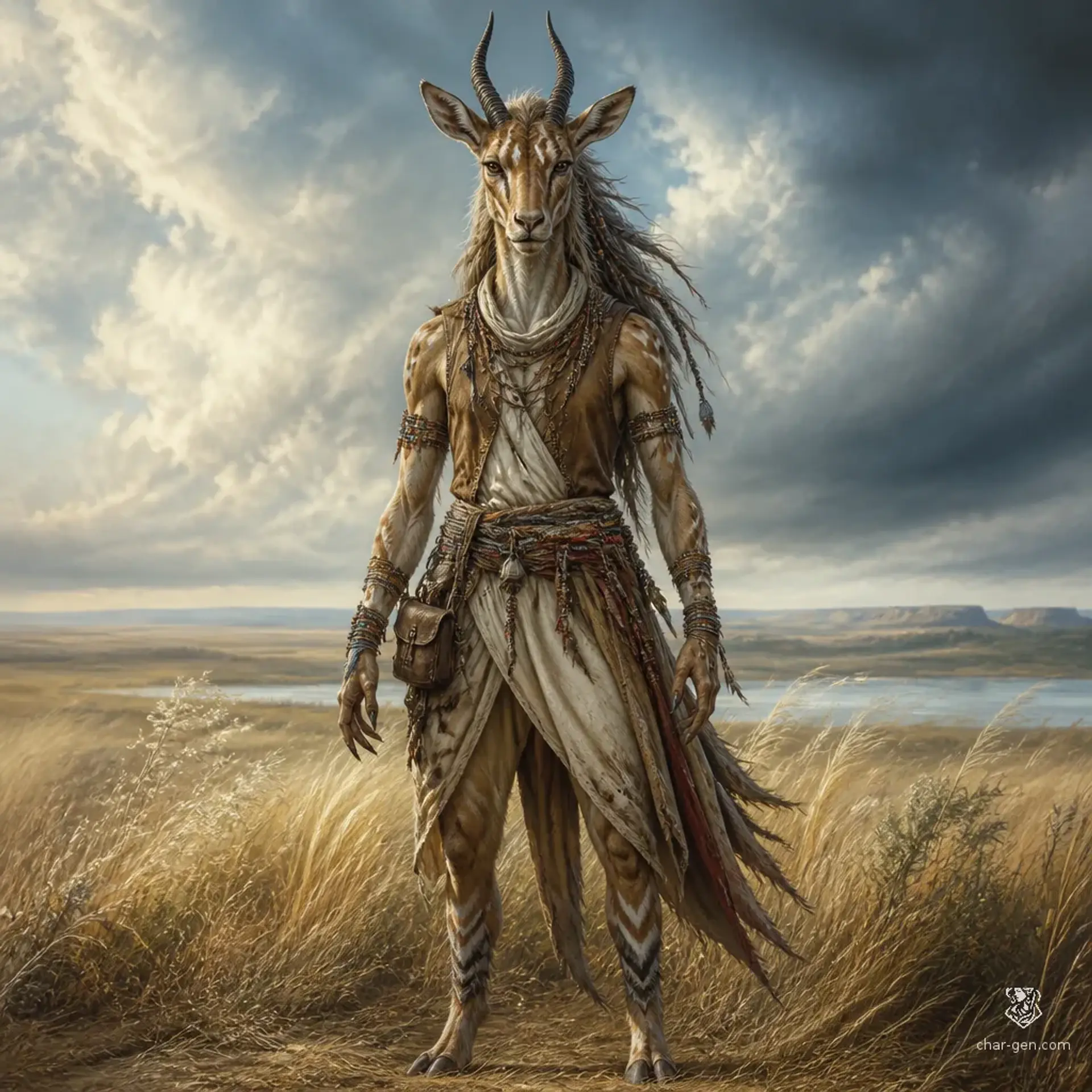
Hearthrunners are the people of the long horizon, beast-folk whose clans cross the plains by following water, weather, memory, and the needs of the herd. They can be patient as old stones, swift as startled antelope, or fierce as a predator defending its young. To a Hearthrunner, every road is a promise made to someone who may travel it later, and every stranger is a possible member of the wider herd. They adventure to protect migration paths, repay old debts, gather stories, or find a place where the wind carries a new song.
Physical Description
Hearthrunners are beast-folk shaped by open country and long travel. Their bodies range from lean and long-legged to compact and powerful, with features recalling antelope, wild cattle, hares, horses, hyenas, gazelles, and other plains animals. All possess keen ears, expressive muzzles, and a coat, mane, crest, or hide marked by natural patterns that often deepen with age. Their hands are dexterous despite claws, hooves, or thickened nails, and their feet are built for distance. Many wear beadwork, painted markings, braided cords, or bells whose meanings identify family, profession, and personal vows.
Society & Culture
Hearthrunner society is organized into traveling hearth-circles, extended communities bound by shared meals, mutual defense, and remembered obligations. A person may belong to a birth family, a craft circle, a caravan, and a seasonal alliance at the same time. Leadership is temporary and task-based. The best person to settle a water dispute may not be the best person to lead a hunt or negotiate with a city. Storytelling is a civic duty, and songs preserve laws, maps, genealogies, warnings, and the names of those who died far from home. Hospitality is sacred, though guests are expected to contribute before they depart.
Religion & Alignment
Most Hearthrunners honor a broad family of spirits associated with wind, rain, fire, grass, beasts, ancestors, and the open sky. Some follow organized gods, while others treat the land itself as a living congregation of powers. Their traditions favor communal responsibility, freedom of movement, and practical mercy, making many Hearthrunners good or neutral. Lawful individuals often become oath-keepers, judges, or caravan wardens, while chaotic individuals may serve as wanderers, tricksters, or boundary-breakers.
Homelands & Architecture
Hearthrunner settlements are designed to breathe with the prairie. Many clans live in portable roundhouses of hide, reed, and flexible wood, while permanent communities use low earthen walls, wind towers, covered wells, and underground storehouses. Doorways face prevailing winds rather than roads. A settlement is measured by the distance between its wells, shade groves, and gathering circles, not by the height of its buildings.
Relationships With Other Peoples
Hearthrunners are practical allies and cautious guests. They often admire settled peoples for their craftsmanship while quietly worrying that walls encourage forgetfulness. They trade widely with farmers, caravaners, and river communities, but distrust empires that claim ownership over water or migration routes. Among adventurers, they are valued as guides, mediators, scouts, and providers of steady morale. They form friendships through shared labor and shared danger rather than declarations of affection.
Visual sheet
Turn Hearthrunners into a sheet
A high-res, share-ready sheet you can post or print.