Small or Medium, chosen when you select this species
Common
Humanoid
Humanoid·Small or Medium, chosen when you select this species
Wayfarer Human
Homo viatoris
Speed
30 ft.
Lifespan
Wayfarers mature at much the same rate as other humans and commonly live 70 to 95 years. Those who spend their lives in hazardous wilderness often die younger, while communities with strong medicine and stable food supplies may produce centenarians.
Habitat
Nearly anywhere, though wayfarers are especially common in frontier villages, forest margins, island chains, mountain passes, and settlements connected to old roads or dangerous wilderness.
human
wanderer
frontier
explorer
beast-friend
adaptable
curious
SizeSmall or Medium, chosen when you select this species
Speed30 ft.
LifespanWayfarers mature at much the same rate as other humans and commonly live 70 to 95 years. Those who spend their lives in hazardous wilderness often die younger, while communities with strong medicine and stable food supplies may produce centenarians.
Creature TypeHumanoid
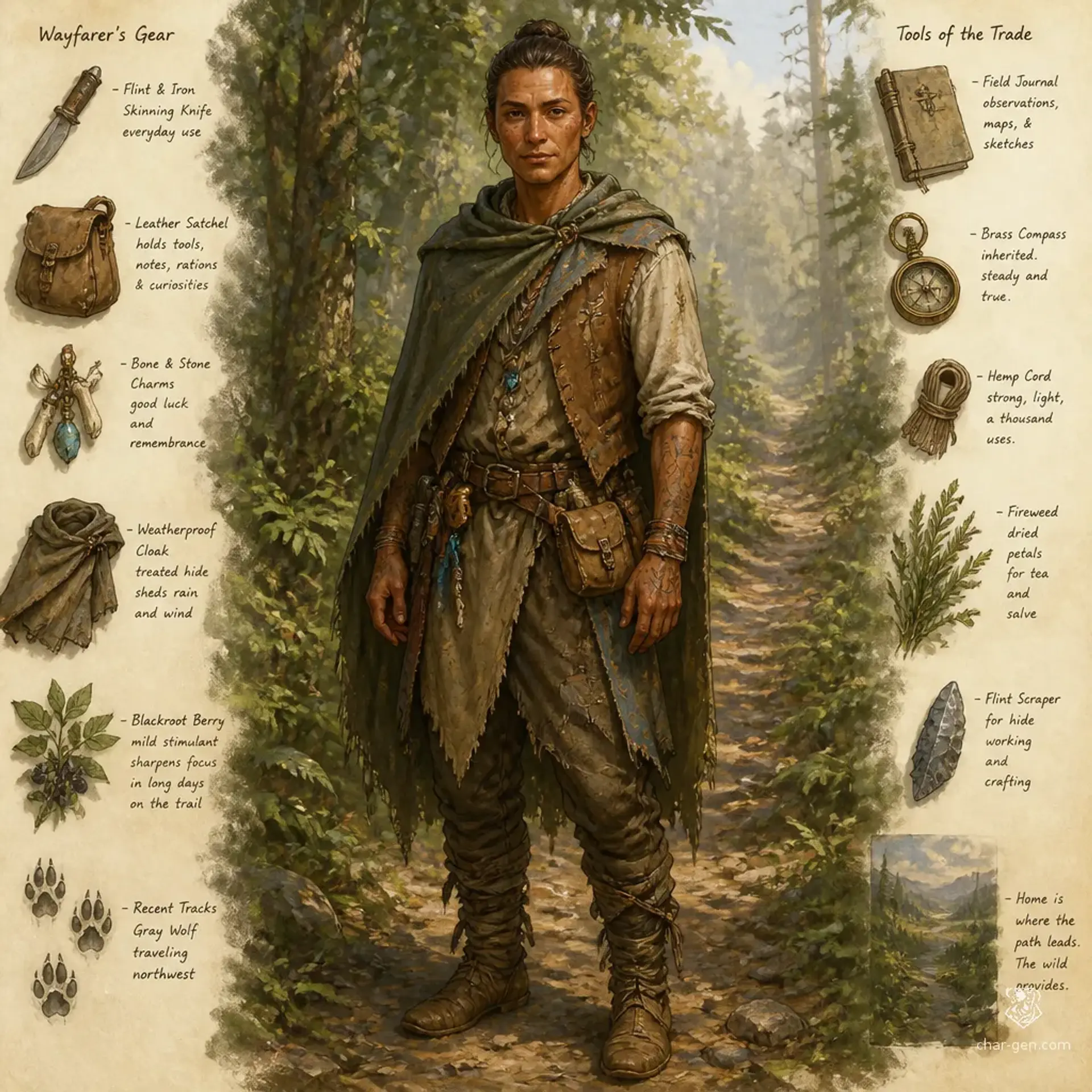
Wayfarer humans are bright-eyed wanderers who treat the unknown as an invitation rather than a warning. They grow strong by climbing, running, listening, failing, and trying again, carrying the lessons of every road into the next. A Wayfarer adventurer may be a village hunter, an ambitious guild candidate, a runaway heir, or simply a child of the open trail who wants to know what lies beyond the next ridge.
Physical Description
Wayfarers possess the broad range of appearances found among humans, but frontier lineages often show the marks of active lives. Their bodies tend to be wiry or strongly built, with callused hands, weather-browned skin, keen eyes, and hair worn in practical cuts or tied away from the face. Many bear scars, sun freckles, travel tattoos, or small charms made from bone, seed, shell, or polished stone. Their clothing is layered for repair and movement, commonly combining sturdy wraps, light armor, weatherproof cloaks, and belts crowded with tools.
Society & Culture
Wayfarer culture prizes curiosity, resilience, and demonstrated loyalty. Children learn by doing, and adults are expected to share useful knowledge freely, whether that knowledge concerns edible plants, storm signs, animal behavior, or the politics of distant cities. Most communities hold a yearly Departure Feast, where travelers are equipped, questioned, teased, and blessed before setting out. Stories are treated as communal property, but the names of those who lived them are carefully preserved. A Wayfarer may leave home for years without being considered disloyal, provided they return with news, skills, or a reason worth hearing.
Religion & Alignment
Wayfarer spirituality is usually personal and local. Some honor river spirits, ancestral hearths, seasonal gods, guardian beasts, or the living land itself. Others follow formal temples encountered during their travels. Their outlook tends toward good or neutrality, with an emphasis on personal freedom, loyalty, and practical compassion. Strictly hierarchical faiths attract fewer followers unless those faiths also encourage exploration, service, and honest self-examination.
Homelands & Architecture
Wayfarer homes are practical, adaptable, and built around movement. Forest communities favor raised walkways, rope bridges, and tree-supported halls. River settlements use floating platforms and stilted houses. Mountain villages carve warm chambers into stone while leaving broad terraces for gardens and animal pens. Their architecture often includes guest rooms, gear sheds, public kitchens, and visible meeting spaces, since hospitality and preparation for departure are treated as civic virtues.
Relationships With Other Peoples
Wayfarers adapt easily to other peoples because their communities have always depended on trade, travel, adoption, and exchange. They are often welcomed as guides, scouts, messengers, and mediators, though settled societies may find their independence unsettling. Wayfarers respect anyone who proves dependable in difficult circumstances, regardless of ancestry or rank. They are especially drawn to individuals who are misunderstood by their own communities, seeing shared loneliness as a reason to offer friendship rather than suspicion.
Visual sheet
Turn Wayfarer Human into a sheet
A high-res, share-ready sheet you can post or print.