Medium or Small, chosen when you select this species
Common
Humanoid
Humanoid·Medium or Small, chosen when you select this species
Veldrin
Homo campestris itinerans
Speed
30 ft.
Lifespan
Veldrin mature at about 16 and commonly live 70 to 85 years.
Habitat
Open plains, prairie, savanna, steppe, and dry grassland
humanoid
plains
migratory
mundane
scout
herder
traveler
SizeMedium or Small, chosen when you select this species
Speed30 ft.
LifespanVeldrin mature at about 16 and commonly live 70 to 85 years.
Creature TypeHumanoid
The veldrin are the grasslands made flesh: watchful travelers, patient herders, and stubborn keepers of roads that existed before kingdoms drew their borders. They can read a storm in the posture of distant birds, find water where others see only dust, and remember a stranger's kindness for decades. A veldrin adventurer may be a wandering scout, an exile from a seasonal camp, a trader learning the customs of settled lands, or a trail-keeper seeking the truth behind a vanished route.
Physical Description
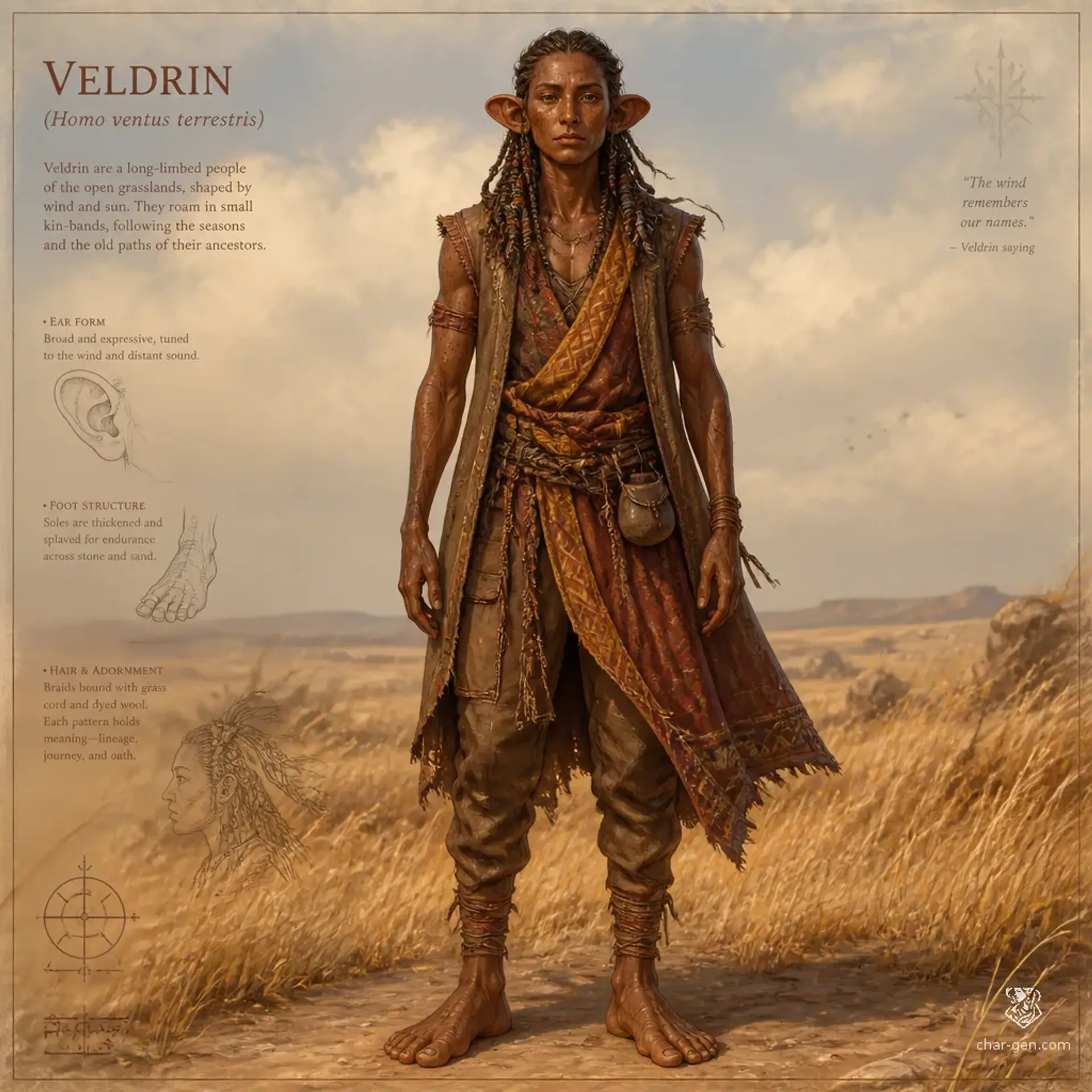
Veldrin are rangy, long-limbed humanoids shaped by generations of travel beneath open skies. Their skin ranges from sun-brown and russet to deep umber, often marked by freckles, pale scars, or windburn. Hair is commonly worn in tight braids threaded with grass cord, shell, bone, or colored wool. Most have broad, expressive ears and slightly enlarged feet with toughened soles, though their faces remain unmistakably humanoid. Their clothing favors layered wraps, practical trousers, sleeveless coats, and bright sashes that display family, occupation, and route affiliations. They carry little, but nearly every possession has a purpose or a story.
Society & Culture
Veldrin society is organized around extended families, traveling herds, and seasonal agreements rather than permanent states. A camp's most respected figures are usually its route-keeper, water-keeper, story-keeper, and healer, though authority is shared during crises. Children learn by accompanying adults and are expected to contribute early, whether by tending animals, watching the horizon, gathering fuel, or memorizing landmarks. Hospitality is sacred but not limitless. A guest receives water, food, and a place in the shade, while a guest who abuses that trust may be remembered for generations. Veldrin storytelling favors practical epics in which clever preparation matters more than glorious victory.
Religion & Alignment
Veldrin religion is usually practical and local. They honor remembered ancestors, revered animals, notable springs, and the unnamed intelligence of wind and weather. Rituals involve sharing water, marking journeys, singing at dawn, and leaving useful objects at graves. Their communities tend toward neutrality, valuing reciprocity and balance over abstract law or chaos. Individual veldrin may be deeply devout, skeptical, or devoted to a wider pantheon adopted during years of travel.
Homelands & Architecture
Veldrin homelands are defined by routes rather than borders. Their seasonal camps use collapsible pole shelters covered in layered felt, painted hide, and woven grass mats. Permanent villages usually stand beside reliable springs and consist of low, rounded homes built to shed wind, with underground storage chambers and broad communal courtyards. Marked stones, standing poles, and braided streamers record safe crossings, old graves, hidden wells, and places where the weather turns suddenly dangerous.
Relationships With Other Peoples
Veldrin are often welcomed as guides, drovers, scouts, and caravan leaders, though settled communities sometimes regard them as unreliable simply because they refuse to remain in one place. They maintain strong trade relationships with farming villages and traveling merchants. Veldrin respect disciplined city folk who keep their promises, distrust authorities who restrict movement, and feel a particular kinship with other peoples who live close to animals, weather, and seasonal change.
Visual sheet
Turn Veldrin into a sheet
A high-res, share-ready sheet you can post or print.