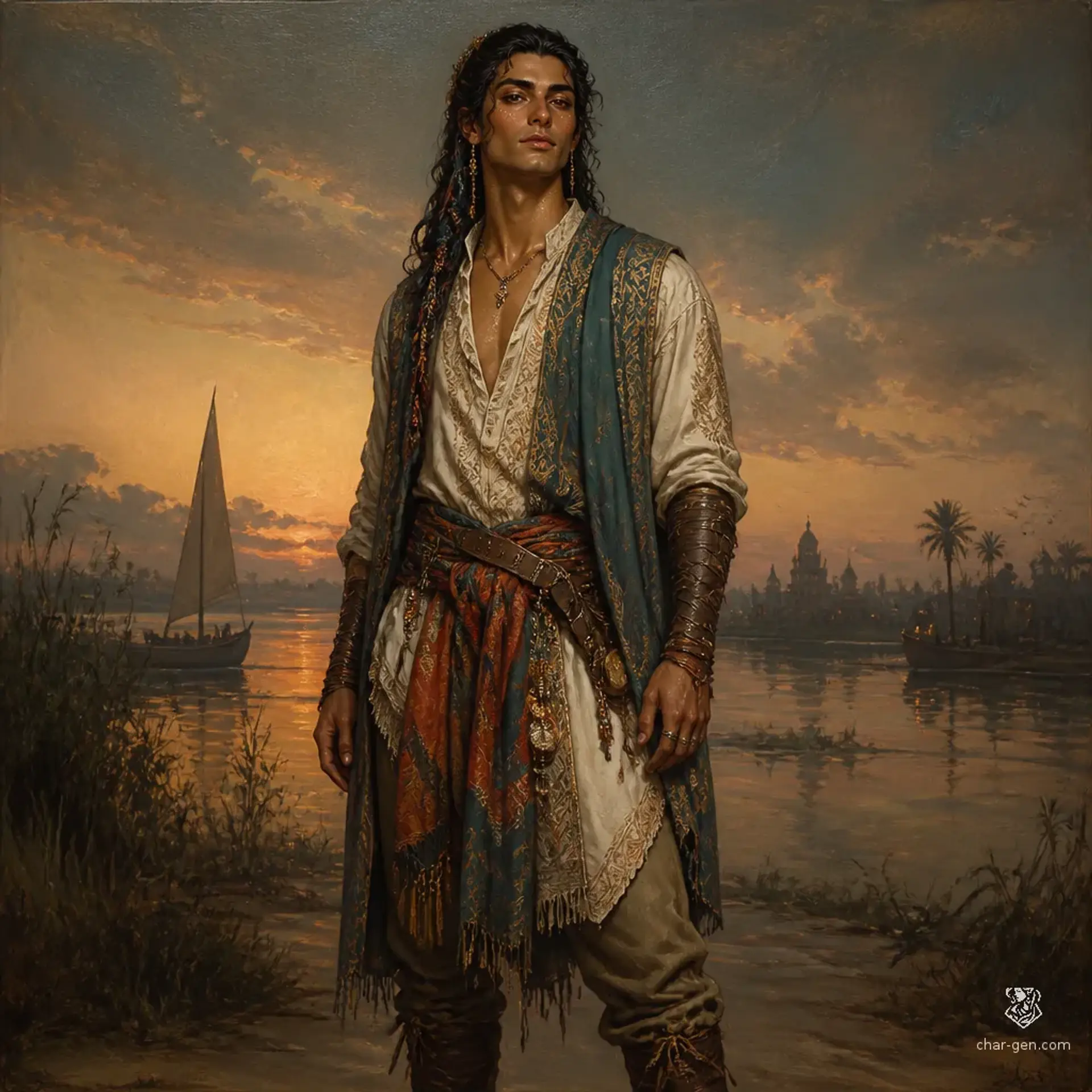
Usually 140 to 180 years, with some living beyond 200 when their lives are sheltered and their spirits remain vigorous.
Darkvision
60 ft.
Habitat
Borderlands, cosmopolitan cities, river deltas, trade roads, mixed villages, and any place where languages and customs overlap.
half-elf analog
homebrew ancestry
cross-cultural
diplomatic
adaptable
borderlands
high fantasy
player character option
field guide
D&D 5E 2024
Arla-friendly
mixed heritage
versatile
traveling folk
socially agile
SizeMedium
Speed30 ft.
LifespanUsually 140 to 180 years, with some living beyond 200 when their lives are sheltered and their spirits remain vigorous.
Creature TypeHumanoid
Darkvision60 ft.
Verdant-blooded folk are the children of crossroads, river ports, and border fires, born where two cultures meet and decide, sometimes uneasily, to continue together. An Arla of this people might be a negotiator with a traveler’s heart, a scholar of buried family lines, or a deft wanderer who treats every city gate as both an obstacle and an invitation. They are at their best when they can translate not only words, but grief, custom, and hope.
Physical Description
Verdant-blooded folk are striking for their balance. They often inherit long limbs, expressive eyes, and delicate or sharply defined features that can resemble either side of a divided lineage or neither entirely. Skin tones range widely, from pale gold and olive to deep umber and ash, sometimes marked by subtle flecks, freckling, or faint sheen at the temples and along the collarbones. Hair can be straight, coiled, wavy, or silken, and many wear it long enough to display family braids, tokens, or dyed threads. Their voices are often memorable for their clarity, carrying warmth, resonance, or a well-practiced neutrality that allows them to move between social worlds with ease.
Society & Culture
Verdant-blooded society is less a nation than a pattern repeated across nations. They gather in mixed quarters, caravan circles, river wards, and family compounds where kinship is defined broadly enough to include chosen family, foster lines, and oath-bonds. Their stories value translation, mediation, and memory. Many communities keep two versions of the same song, one from each ancestral thread, and perform both on festival nights. Children are often raised by a web of relatives and family friends, which gives them a practical education in diplomacy before they can shave or carry a spear. Their greatest cultural shame is not impurity, but forgetfulness.
Religion & Alignment
They are religiously eclectic, often honoring the spirits, gods, or philosophies of both parent traditions and any place that gave them shelter. Their faith tends to be practical and relational rather than doctrinal. In alignment terms, they are often pulled toward empathy, balance, and freedom, but the pressure to prove themselves can create stern traditionalists, passionate idealists, or quietly rebellious souls.
Homelands & Architecture
Their homelands are usually margins rather than centers. They favor houses with flexible rooms, shaded courtyards, layered windows, and doors that admit both guests and weather. Mixed materials are common: carved wood beside stone, woven screens beside glass, and family shrines tucked into practical spaces. Their architecture often looks like a conversation between traditions rather than a compromise.
Relationships With Other Peoples
Most peoples know the verdant-blooded folk as adaptable, courteous, and sometimes hard to categorize. They are often welcomed as bridges between communities, yet they can also be treated with suspicion by those who believe identity must be singular and pure. Among travelers, merchants, diplomats, and refugees, they are often trusted because they understand what it means to live between loyalties. They usually form strong friendships across cultures, though family obligations can be complicated, generous, and intensely personal.
Visual sheet
Turn Verdant-Blooded Folk into a sheet
A high-res, share-ready sheet you can post or print.