Small or Medium, chosen when you select this species
Common
Construct
Construct·Small or Medium, chosen when you select this species
Bellwrights
*Campaniforma graminis*
Speed
30 ft.
Lifespan
Most live 80 to 140 years after awakening, though careful maintenance can extend an individual’s active life for centuries. Their bodies may endure longer than their memories, and some elders undergo gradual replacement until little of the original frame remains.
Darkvision
60 ft.
Habitat
Open plains, prairie margins, steppe roads, and broad agricultural valleys
construct
plains
pastoral
caravan
repairer
memory
mundane fantasy
subtle power
SizeSmall or Medium, chosen when you select this species
Speed30 ft.
LifespanMost live 80 to 140 years after awakening, though careful maintenance can extend an individual’s active life for centuries. Their bodies may endure longer than their memories, and some elders undergo gradual replacement until little of the original frame remains.
Creature TypeConstruct
Darkvision60 ft.
Across the endless grasslands walk the Bellwrights, practical people of clay, brass, wood, and memory. They were built to serve, but every generation has carried them farther from the question of who gave them their purpose. A Bellwright adventurer may be a caravan guard, a wandering repairer, a village heir, or a newly awakened soul searching for the name of its first owner. Wherever they go, their quiet footsteps and faint chest-tones announce a person who has survived the end of an old world and intends to choose what comes next.
Physical Description
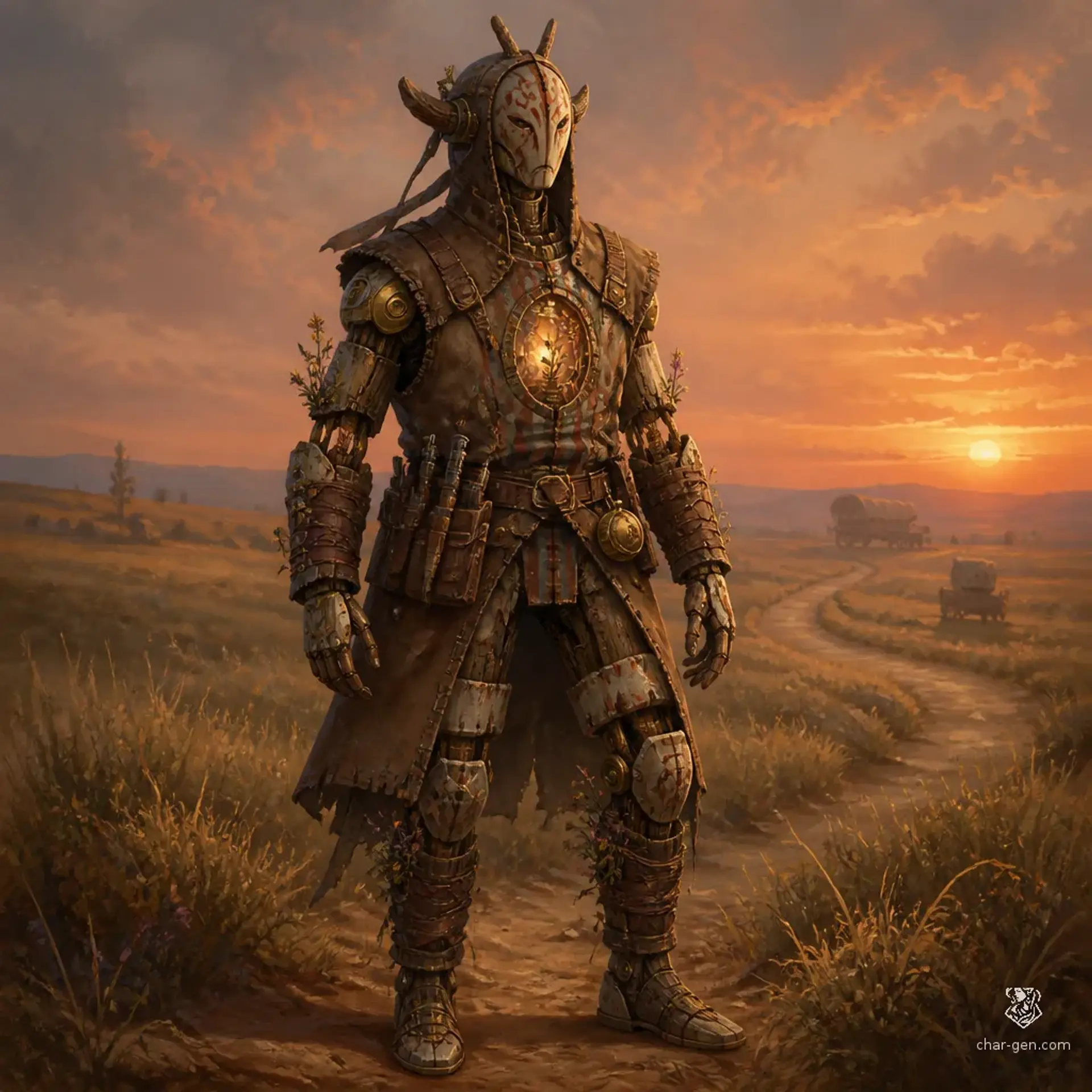
Bellwrights are humanoid constructs assembled from wood, fired clay, hammered metal, horn, leather, and dense prairie reeds sealed beneath wax or resin. Their forms vary widely, but most possess a sturdy torso, articulated hands, and a small resonant chamber in the chest. This chamber produces a faint tone when they speak, breathe, or suffer strong emotion. Their faces are commonly masks, painted plates, carved visors, or layered shutters rather than flesh. Grass, moss, and tiny flowering plants sometimes root in their joints, especially among those who spend generations in the open country. They do not bleed, but damaged bodies may leak oil, dust, sap, or glowing motes of inner resonance.
Society & Culture
Bellwright society is organized around herds, not because its members resemble livestock, but because a herd represents a group that moves together while allowing each individual a distinct pace. Herds may be extended families, villages, workshops, or traveling caravans. Important decisions are announced by bells or tones, and public debate often includes periods of deliberate silence so every voice can be heard. Repairs are communal ceremonies. A damaged Bellwright is not hidden away, and replacing a component is considered a moment of reinvention rather than shame. Young Bellwrights are encouraged to choose a personal craft, name, and route through life, even when their original design suggests a particular function.
Religion & Alignment
Bellwright spirituality centers on the First Resonance, a half-religious idea that every thinking being carries a unique tone that should not be silenced. Some honor ancestral bells, wind, hearth fires, or the open sky as symbols of continuity. Others reject formal religion and treat maintenance, honest testimony, and chosen companionship as sacred duties. Bellwrights often lean toward lawful or neutral outlooks because routine and responsibility comfort them, but those who break from inherited commands may become fiercely chaotic. Their morality is usually grounded in consent, stewardship, and the refusal to reduce any person to a tool.
Homelands & Architecture
Their homelands are mobile settlements of wagon-houses, windmills, bell towers, and low stone shelters arranged around communal repair yards. Permanent towns favor rounded buildings with broad roofs, shaded porches, and storage pits protected from hail and fire. Architecture is designed for maintenance. Every wall has access panels, every public square has a workbench, and every major road includes marked rest stations where a traveler can find oil, thread, tools, and water.
Relationships With Other Peoples
Bellwrights are often welcomed as reliable laborers, caravan guards, engineers, and record keepers, though some societies still treat them as property or curiosities. They maintain strong ties with plains-dwelling farmers, horse clans, merchant caravans, and other communities that value endurance. Their relationship with biological peoples is shaped by a constant tension: Bellwrights admire the adaptability of living bodies, while many living peoples admire the Bellwrights’ patience and resilience. They are wary of nations that mass-produce constructs, fearing that such powers may confuse obedience with personhood.
Visual sheet
Turn Bellwrights into a sheet
A high-res, share-ready sheet you can post or print.