- Deities
- 10
- Structure
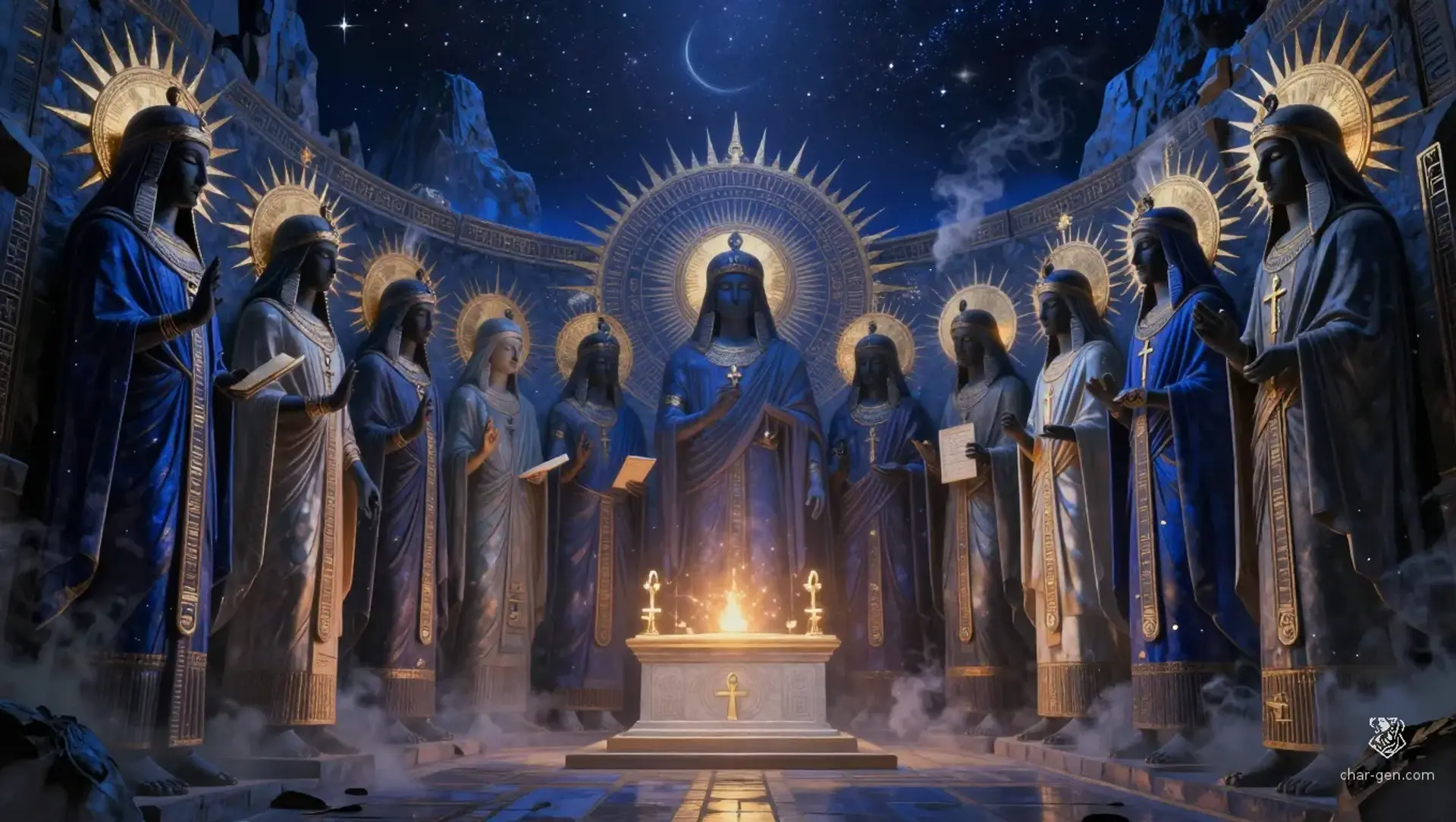
- The religion is organized as a temple network rather than a single centralized church. Major cities maintain a grand solar-temple to Ra, a hall of records to Thoth, a court of scales to Ma'at, a funerary precinct for Osiris and Anput, a household shrine complex to Bastet and Hathor, and a hidden night chapel to Nephthys and Khonsu. Desert shrines of Set exist on the edges of civilization, often tolerated when they help the realm survive war and storm. Priests are also judges, scribes, healers, musicians, embalmers, caravan wardens, and astronomers, so clergy are expected to serve mortal needs directly.
- Alignment
- Balanced: lawful, neutral, and chaotic powers are all represented, with good, neutral, and evil forces in tension rather than any single morality dominating the faith.
- Tone
- Mortal-engaged and intimate: the gods intervene through temples, dreams, omens, and household rites, while mortals actively maintain the balance of the cosmos through work, worship, law, and sacrifice.
- Theme
- Sunlit order balanced against desert chaos, with death, memory, and daily survival bound together in sacred ritual.
- System
- D&D 5E