
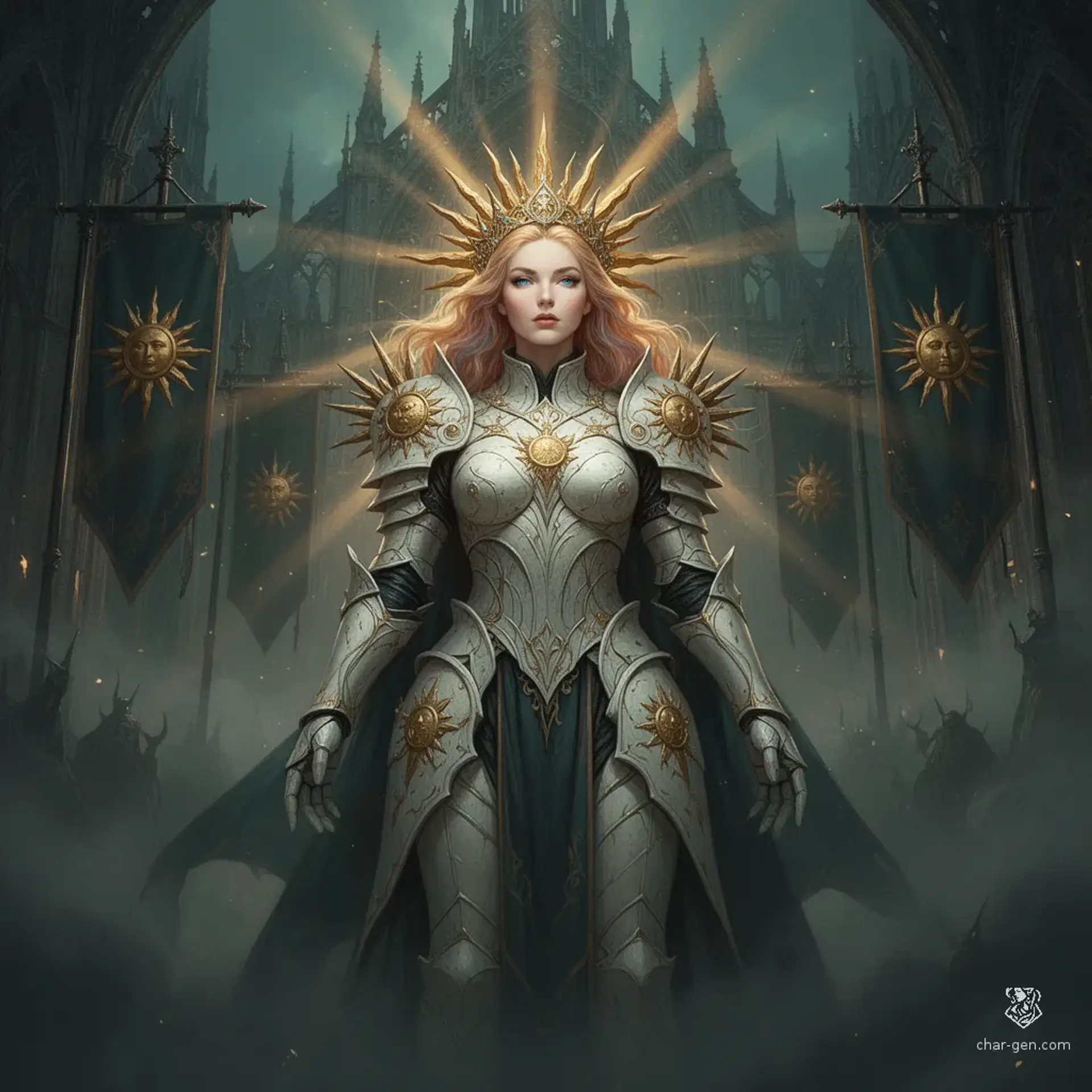
Helios
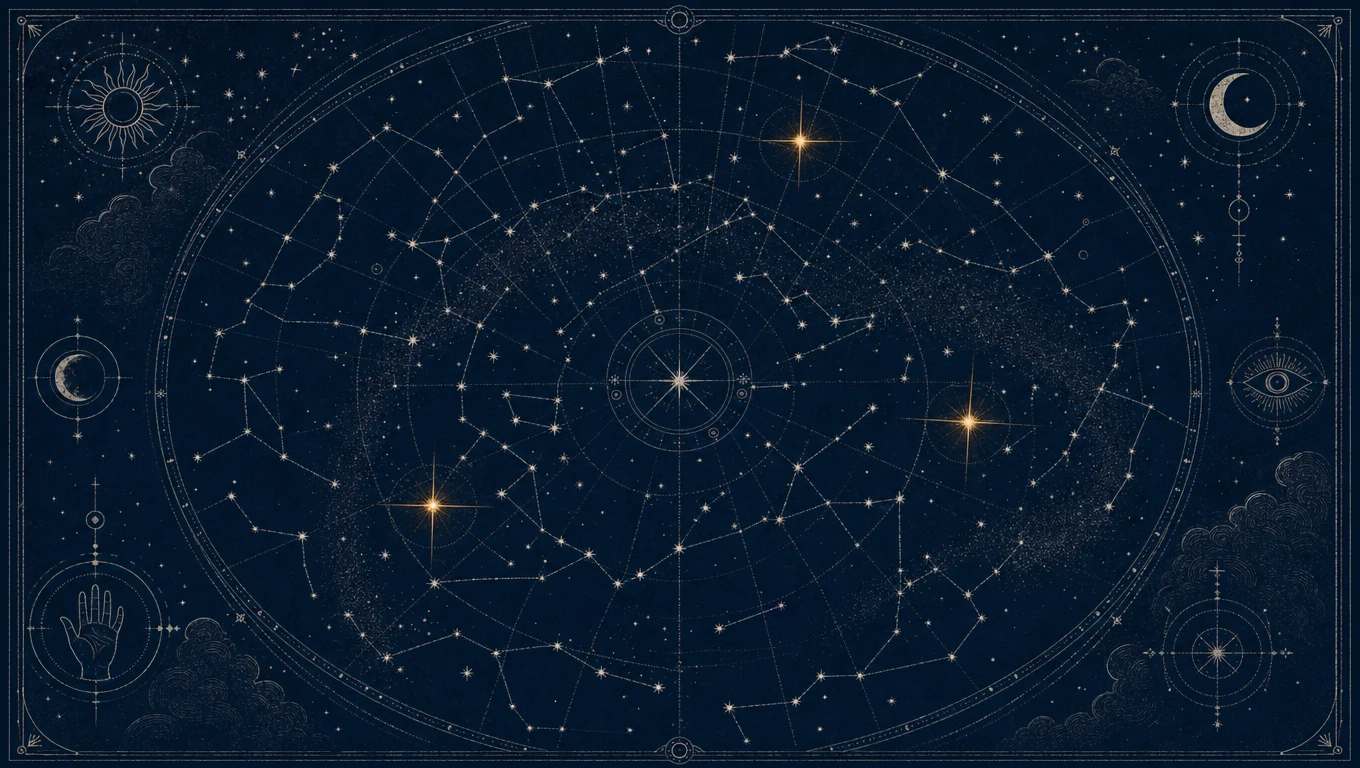
Origin
In the first age, the world was a dark sea beneath a sealed sky. Helios struck the vault with his spear of dawn and broke a single star into five living flames, each becoming a child-deity suited to mortal needs. He then hung the Sun in the heavens as a covenant: light would return each day, but only if mortals kept faith with truth, labor, memory, freedom, and mercy. The religion remembers this not as a conquest, but as a bargain between heaven and the needs of ordinary people.
Cosmology
The cosmos is a dome of moving heavens driven by the Sun-King Helios, whose light does not merely illuminate but reveals truth, sustains life, and marks time. Dawn is considered the moment of creation renewed; noon is order in its purest form; sunset is not defeat but a mercy administered by Umbra. Light is never absolute in this faith—every beam casts a shadow, and every shadow testifies that the world remains real. Helios is said to have forged the Sun and then divided its power among his five children, who each govern a different aspect of light in mortal life.
Structure
A fivefold court beneath Helios, centered on a high solar cathedral with five subsidiary shrines around a central sunwell. Solenne presides over civic ritual and law, Asterion over hearth and labor, Calyx over archives and calendars, Veyl over roads and public revelation, and Umbra over dusk and the dead. Festivals move clockwise with the sun through the year, and each shrine can temporarily host the others during emergencies, reinforcing the faith's mortal-engaged nature.
Mortal Relations
Helios is unusually close to mortals. Its temples double as courts, hospitals, foundries, libraries, wayhouses, and hospice halls, and every god expects some form of direct service among the living. Priests are encouraged to settle disputes, sponsor roads, heal the sick, maintain records, and host public festivals, because the faith teaches that divine light has value only when it touches ordinary lives. Mortals bargain, petition, and occasionally argue with the gods through omens, dreams, and temple rites, and the pantheon regards that friction as healthy rather than irreverent.
Afterlife
The faithful believe souls cross the Dawn Road, a radiant river that carries the worthy to the Sunspire beyond the horizon. There, they are judged at sunrise by Helios' court, then sent to one of three mortal-facing heavens: the Orchard of First Light for healers and guardians, the Lantern Fields for laborers and artisans, or the High Noon Bastion for warriors who fought in the open. The unworthy are not damned immediately; they are cast into the Ash Dunes to wander until they remember the names of the gods they wronged.
Turn Helios into a sheet
A high-res, share-ready sheet you can post or print.