
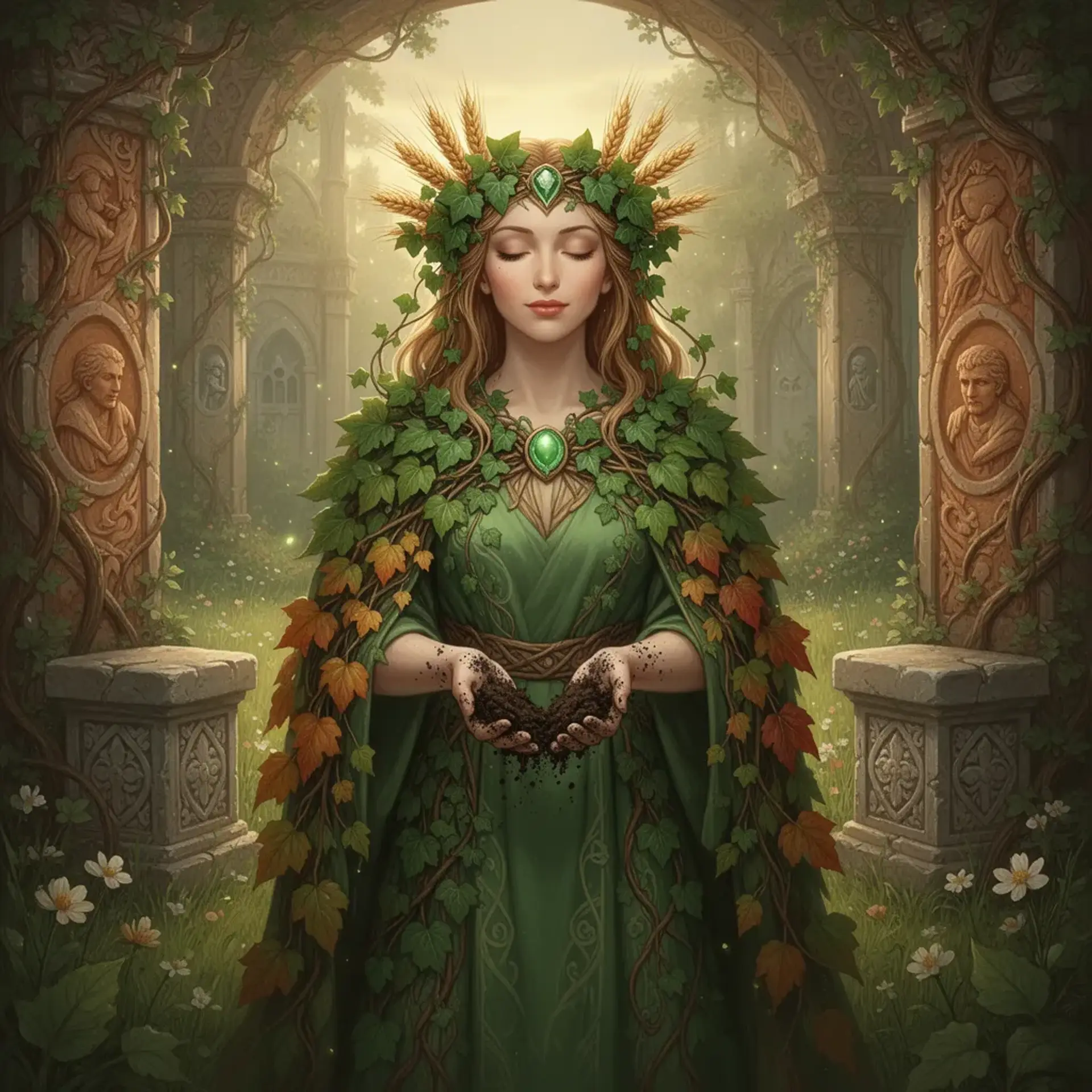
Unnamed pantheon
Origin
In the oldest surviving hymns, the gods are said to have emerged when the first mortal witnessed dawn reflected in standing water. Other traditions claim they were born from the sacrifice of a ninth, forgotten power whose name was removed from every record by Veyra, hidden by Sableth, and sealed by Kaelth. Whatever the truth, they are understood as ancient, remote, and already established when the first cities rose.
Cosmology
The cosmos is imagined as a great layered vault: the Unseen Stars above, the Mortal Sea below, and the Silent Underworld beneath all things. Aurelion is the highest light, but even he is not omnipresent; his authority travels through constellations, heralds, and the measured passing of seasons. Marn governs the waters that divide lands and lives, while Sableth moves in the spaces between moonrise and sleep. Veyra binds the whole with memory and law, Lythane nurtures growth at the edge of decay, Edris keeps the sacred flame that outlives ruin, Thalos teaches that ambition must be tempered by burden, and Kaelth waits at the final gate. Together they form a distant machine of fate, neither cruel nor kind, but ancient beyond mortal measure.
Structure
The religion is decentralized and temple-based, with regional cults emphasizing different deities while recognizing the whole pantheon. Priests are organized by function—keepers of dawn, tide-readers, ledger-scribes, grove-healers, veil-oracles, forgewardens, tribute-lords, and mortuary attendants—rather than by a single universal hierarchy. Major cities maintain multi-shrine sanctuaries where civic needs and holy rites overlap, while rural shrines often honor only the gods most relevant to the land. The faith is unified less by doctrine than by shared myth, recurring symbols, and the belief that every god is a necessary but distant force in an immense and ancient order.
Mortal Relations
Mortals are regarded as small, capable, and meaningfully brief. The gods do not walk the world openly; they act through omens, saints, relics, sacred places, and the stubborn consequences of vows. Clergy serve as interpreters rather than owners of divine will, and most communities honor multiple deities depending on need, season, and local tradition. Temples are often practical institutions as much as spiritual ones: a Marn shrine doubles as a waystation, a Lythane grove as a clinic, a Veyra archive as a courthouse, and an Edris hall as a forge.
Afterlife
The dead cross the Pale Threshold and are weighed at the Last Harbor, where Aurelion keeps the stars dim, Marn the Tiderunner ferries the worthy, and Veyra the Veiled Ledger records every oath. Souls who clung to honor are given to Lythane’s quiet gardens, those of cunning to Sableth’s moonlit halls, and the faithless wander the outer dark until Edris the Ember-Keeper or Kaelth the Ashen Crown claims what remains. The afterlife is distant, orderly, and half-remembered, as though mortals can only glimpse it through fog, prophecy, and old sea glass.
Turn Unnamed pantheon into a sheet
A high-res, share-ready sheet you can post or print.