The Salvage War
Stakes Control of the largest divine remains means control of food, magic, pilgrimage, and the future shape of civilization.
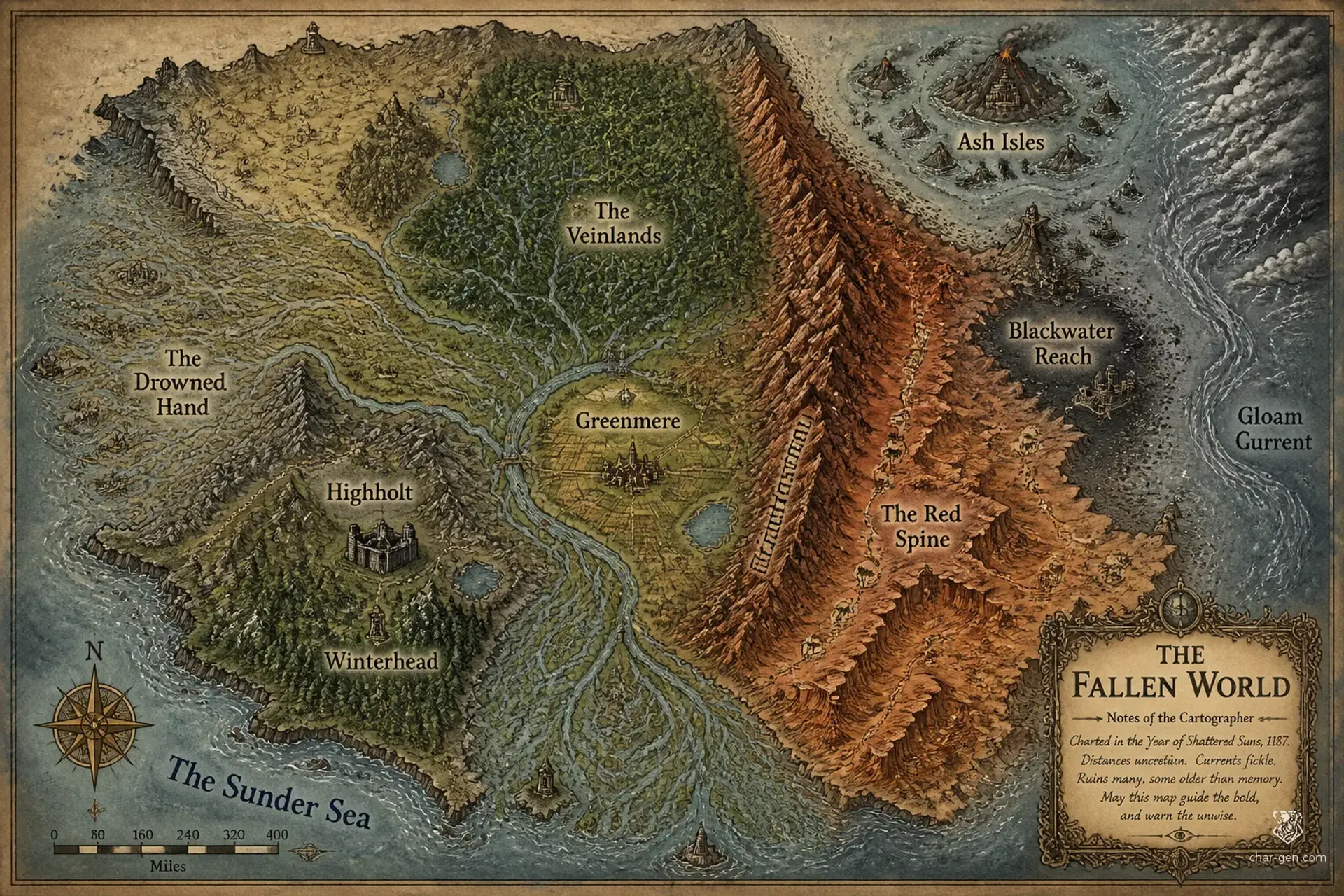
World Atlas·Sphere·Civilization survives inside the bodies of dead gods.
A dangerous frontier of salvage, smuggling, and coastal pilgrimage. · Salt marsh and tidal flats
Hook
A drowned god's hand rises from the marsh each new moon, exposing doors in its knuckles.
Fifty-eight years ago, the gods died, and their bodies fell across the planet. Mountains are ribs, rivers run through opened veins, and cities cling to colossal skulls, hands, and hearts. Their remains still leak magic, making wonders common and disasters familiar. Kingdoms argue over salvage rights, priests debate whether the dead deserve burial, and ordinary people build lives in the shelter of divine ruin while fearing what may stir beneath it.
Themes
Form · Sphere
A normal spherical planet whose continents and seas are marked by the immense, slowly decaying bodies of dead gods.
Traversal
Travel follows ordinary roads, rivers, coasts, and sea lanes, with corpse interiors providing shortcuts, hazards, and blocked passages.
Sphere
Magic
Common
Technology
Medieval
Death & Souls
Before the Fall
The Living Covenant
The Breaking
The Last Prayer
After the Fall
The Bonebound Years
The Salvage War
Control of the largest divine remains means control of food, magic, pilgrimage, and the future shape of civilization.
The Quiet Waking
If the gods awaken, the world may be healed, remade, or crushed beneath bodies that never truly finished dying.
Secure divine remains, regulate salvage, and unite the major settlements under one legal crown.
Protect the dead gods from exploitation and uncover a lawful path to resurrection.
Keep the corpse-cities independent and profit from dangerous expeditions into forbidden remains.
Awaken the gods through mass sacrifice, believing divine death caused every mortal failing.
Stakes Control of the largest divine remains means control of food, magic, pilgrimage, and the future shape of civilization.
Stakes If the gods awaken, the world may be healed, remade, or crushed beneath bodies that never truly finished dying.
The gods walked openly among mortals, trading miracles for worship, laws, and sacrifice.
Fifty-eight years ago, the gods died together, and their falling bodies reshaped continents, seas, and kingdoms.
People built cities inside divine remains, harvesting fading miracles while new faiths, wars, and trade routes took root.
A mining town breaks into a sealed divine nerve and begins receiving orders from something beneath the ground.
A pilgrimage road has vanished inside a spreading field of living tissue that heals every wound except its own.
A royal expedition seeks the dead god's heart before rival cities can claim the power hidden inside it.
Children across several regions dream of the same face and wake speaking a language no living priest knows.
The gods were murdered by a force that used their own divine covenant against them.
Discovery · Old maps, mismatched burial records, and identical scars on distant corpses point toward the truth.
Impact · The gods did not die together by accident; something outside the world killed them and may return.
The fallen gods share a buried nervous system beneath the continents.
Discovery · Healers find that certain wounds pulse in rhythm with distant corpse-sites.
Impact · The bodies are connected, and damage to one can awaken or cripple another across the planet.
One god is still alive, but only as scattered memories inside mortal minds.
Discovery · A spirit speaks through a cracked shrine only when no priest is present.
Impact · One god survived as a fragmented consciousness, and its divided thoughts are guiding several factions toward war.